
Headmaster Mark Case shares why delaying smartphones until the end of Year 9 can benefit young people, and how families working together can make it easier to say “not yet”.
Christmas may still feel some distance away, but for parents of children approaching the teenage years it can bring with it a particular request:
Can I have a smartphone?
For families whose children will be below Year 10 at Oxley next year, my advice is quite straightforward: please consider making the answer no.
I have written about smartphones and social media several times over the past two years. When we began this conversation in 2024, I described their impact on children and young people as an emerging public health issue. We subsequently introduced our smartphone policy, progressively extending it so that students below Year 10 do not bring smartphones to school or College events.
There is good reason to continue with this approach.
Australia has, of course, moved considerably further since then. Since 10 December 2025, social media platforms have been required to take reasonable steps to prevent Australians under 16 from creating or maintaining accounts. The eSafety Commissioner explains that the restrictions are intended to protect young people from pressures and risks associated with social media, including design features that encourage them to spend more time on screens and content that can harm their health and wellbeing.
The research itself deserves some care in how we describe it. Not every young person who uses social media will experience poor mental health, and researchers continue to debate the strength of the causal relationship between social media and particular mental-health outcomes. What is increasingly difficult to dispute, however, is that there are significant risks associated with problematic social-media use during adolescence. Recent research identifies pathways involving social comparison, sleep disruption, cyberbullying, body image and problematic patterns of use.
Adolescence is not an insignificant time to expose children to these pressures. It is precisely the period when identity, friendships, belonging and the views of peers assume enormous importance.
This term our Year 9 Cornerstone students will explore some of these questions through a unit called Clicks, Likes and Algorithms, including a study of the Netflix documentary The Social Dilemma. The unit will ask students to think critically about how social media platforms work, the role algorithms play in influencing what we see, and the psychological and ethical consequences of social media use. It builds on work we began some time ago around precisely these questions
There is, however, another part of this conversation which I think matters just as much as the research.
“But everyone else has one!”
This is perhaps the most powerful argument a child can make.
Parents understandably do not want their child to be left out. Nobody wants their daughter to discover that arrangements between friends have been made on an app she cannot access, or their son to feel that he is on the outside of a friendship group because everyone else is communicating online.
Indeed, when we sought feedback from Oxley families after introducing our policy, this was the most significant difficulty identified by some parents. One family told us that their daughter was experiencing precisely this problem because her friends had smartphones outside school.
But therein lies both the problem and the solution.
One family delaying a smartphone can be difficult.
Ten families doing it together is much easier.
An entire cohort doing it changes the social norm.
That has been one of the most encouraging lessons from Oxley over the past two years. Parents have told us that the College policy gave them permission to say, in effect, not yet. One parent put it beautifully: “I love that I now can say ‘There’s no point until after Year 9!’ when I’m asked ‘When can we have a phone?’” Another contrasted an older child who had received a smartphone in Year 7 with a younger sibling who had not, describing the younger child as much less attached to devices.
This is why I would encourage parents, particularly those in Years 5 to 9, to talk to one another.
Make an agreement amongst friendship groups. Better still, make it across the cohort:
Let’s wait.
Not forever. Just until the end of Year 9.
It removes one of the greatest pressures parents face because when your child says,“Everyone else has one,” the answer can genuinely be, “Actually, they don't.”
Importantly, delaying a smartphone does not mean denying a child a means of contacting their parents. There are feature phones or “dumb phones” that provide calls and text messaging without putting the internet, an app store and social media platforms into a child's pocket. Oxley families are already using this approach. One parent told us their son uses a “dumb” phone for school, while another observed that their Year 7 child frequently leaves theirs at home.
We have also had a timely reminder of this at Oxley in recent weeks. Senior School students have just returned from camps where they were not permitted to have their phones with them. Perhaps the most striking example was our Year 11 Outback trip: two weeks travelling by bus from Oxley to Uluru and back, without a mobile phone in hand. Students handed in their phones at the beginning of the trip and had access to them only at specific, time-limited moments to make phone calls home.
Think about how unusual that has become. Two weeks of travelling together, seeing extraordinary parts of the country, talking, laughing, reading, playing cards, looking out the window and, no doubt, sometimes being thoroughly bored, without the reflex of reaching for a phone.
Perhaps the point is not that something was missing, but that its absence made room for other things.
And that is a useful way to think about delaying a smartphone more generally. We tend to focus on what a child might miss by not having one. I wonder if we should turn that around.
What are we giving them?
We are giving them a little more time without the constant pull of notifications, algorithms and social comparison. More room for face-to-face friendships, reading, sport, conversation, boredom and all the ordinary things from which childhood is made.
We are not trying to keep young people away from technology forever. Our responsibility is to help them learn to use it wisely. There is, however, a difference between preparing a young person for the digital world and feeling compelled to place that world in their pocket before they are ready.
So, as Christmas approaches, if a smartphone begins to appear on somebody's wish list, perhaps the question is not just:
“What will my child miss if I say no?”
Perhaps we should also ask:
“What might they gain if, together, we say: not yet?”
Mark Case
Headmaster
Resources for Parents
Parents who would like practical support in delaying a smartphone may find Wait Mate particularly useful. It is an Australian movement built around the same principle discussed above: waiting is much easier when families in the same school community make the choice together. Parents can also see participation within school communities.
If you search for Oxley College, the current figure shown is that families representing around 23% of our Junior School students have made the commitment to wait. (This figure is current at the time of writing.)
Wait Mate also has a useful parent resources section, including practical advice about talking with other parents, research and information about alternatives to smartphones.
The eSafety Commissioner also provides information for families about Australia's under-16 social-media restrictions and the reasons they have been introduced.
Tristan Bevan, Deputy Head – Head of Senior School, writes about how success and character are built through the small habits we practise every day.
“You are what you repeatedly do.” For school students, this is a powerful reminder that success is rarely the result of one remarkable moment. More often, it is built quietly through the small choices made each day: arriving prepared, listening carefully, completing work with care, asking for help and trying again when something is difficult.
These habits do more than improve academic results. They shape character. A student who repeatedly chooses persistence becomes resilient; one who practises kindness becomes compassionate; one who accepts responsibility becomes dependable. Over time, what begins as a deliberate action becomes part of who they are.
My family had a mantra: ‘The Bevans are never late.’ A little corny, perhaps, but it grew from habits instilled in me at school, in cadets and in the Naval Reserve. ‘Wait until you have kids,’ people said. Our response was simple: get ready sooner, anticipate the inevitable chaos and maintain the same expectation.
As parents and educators, we can help young people focus less on perfection and more on consistency. We can encourage them to choose one positive habit, practise it faithfully and recognise that progress is often gradual. The future is not formed in a single leap, but through the actions repeated today.
With the end of term approaching, parents can play an important role in helping their children use the remaining time well. A quiet conversation about what still needs to be completed, where greater effort is required and which routines need to be maintained can provide valuable direction. There is still time to finish the year well, not through a frantic final push, but through purposeful choices, steady effort and making the most of each day available.
Tristan Bevan
Deputy Head - Head of Senior School
While our approach to photo permissions has changed, we remain committed to celebrating our students, their achievements and their experiences across the College. Through our weekly newsletter The Oxley Update and Our Oxley Community Galleries page available via Oxley Connect, we look forward to sharing more of the moments that make life at Oxley special, while respecting each family's photo permissions and privacy.
If you haven't filled out the form to update your child's publishing permissions you can do so HERE

At Oxley, we are fortunate to have a team of exceptionally talented, dedicated and highly qualified staff who bring both expertise and heart to their work each day. Their commitment shapes the experiences of our students in ways both seen and unseen and it is a privilege to share more of their stories with our community. This week we celebrate Director of Students: 7-12, Mrs Jodie Wolstencroft.
What inspired you to pursue teaching, and what do you find most rewarding about working in education?
I was inspired by the teachers I had growing up and the positive impact they had on me. I’ve always loved sport and the opportunities it provides to improve health, build confidence, develop lifelong skills and bring people together. Teaching has allowed me to share that passion with others. What I find most rewarding is building positive relationships with students, getting to know them as individuals and seeing them grow in confidence, succeed and develop skills they can carry with them beyond the classroom.
Tell us a bit about your journey - what led you to teach at Oxley?
I’m a local, born in Bowral and educated right here in the Southern Highlands. Growing up, I had plenty of friends who attended Oxley, along with a pretty fierce, but friendly, rivalry between our schools! For over 5 years, I had been travelling to Goulburn for work and had just started my own family, so I was keen to find something closer to home. When an opportunity came up at Oxley in 2019, I was fortunate enough to be offered the position, and the rest is history!

What do you hope students remember most about their time in your classroom?
I hope students remember feeling known, supported and valued. For me, teaching is about building genuine connections and creating an environment where every student feels comfortable being themselves and giving things a go. I also hope they take away the important life skills that PDHPE offers, including resilience, teamwork and the ability to make informed choices about their health and wellbeing beyond the classroom.
When you're not at school, what are some things you love doing or exploring?
Most of my time outside school is spent with my family. We love getting outdoors, whether that’s walking, riding bikes, playing sport or spending time in the garden. I also play hockey during winter and basketball in summer, so there’s usually something keeping me active.
What's your favourite thing about the Southern Highlands?
Definitely the sense of community and having nearly my whole extended family here. There’s something special about living in a place where you have such strong connections, and I love the beautiful, leafy surrounds and enjoying the outdoors. It’s a wonderful place to raise a family and a place I’ve always been proud to call home.
Thank you Mrs Wolstencroft!
Co-Curricular Clubs will commence in Week 3, operating on Tuesdays and Thursdays through to Week 8 from 3.30pm to 4.30pm.
There are still places available in the following Co-Curricular Clubs.
Year 3 and 4 Orienteering - Ms Ruth Shedden ($100 per term)
Junior School Orienteering is a fun and active club where students learn basic navigation and map-reading skills while exploring the school grounds and completing exciting orienteering challenges. Term 4 is suitable for beginners who have not yet done orienteering as a co-curricular.
Year 5 & 6 Elevate Study Club Session (No charge)
Please note that the Year 5 and 6 Elevate Study Club Sessions do not incur a fee, however students are required to enrol to secure a place. If a student is not enrolled, they are not permitted to attend Elevate Study Club as numbers are strictly limited.
Year 3 and 4 Tech Plush Studio with Ms Noonan ($100 per Term)
Tech Plush Studio invites students to transform the characters they design using digital technology into real, huggable soft toys.
Across the term, students will design a plushie using digital drawing tools, then bring it to life with fabric, stuffing, and simple hand-sewing, adding details like felt and eyes to personalise their creation. This club builds creativity, persistence, and fine motor skills, and is perfect for beginners as well as students who already love sewing or craft
Year 5 & 6 Robotics & Coding with Mr Sheppard ($100 per term)
Junior School Robotics and Coding Club is a fun, hands-on club where students explore coding, robotics and technology through creative challenges, problem-solving and interactive projects.
Year 5 & 6 Elevate Study Club Session (No charge)
Please note that the Year 5 and 6 Elevate Study Club Sessions do not incur a fee, however students are required to enrol to secure a place. If a student is not enrolled, they are not permitted to attend Elevate Study Club as numbers are strictly limited.
Bookings can be made via the following link.
A great start to the Summer Sport season!
Congratulations to all our Junior School basketball and cricket teams on a fantastic start to the Summer Sport season! It was wonderful to see so much enthusiasm, teamwork and Oxley spirit across the courts and fields during the opening rounds. Well done to all students for representing the College with pride, and congratulations to those teams that celebrated their first wins!
Week 2 (19–25 October): No training or basketball games due to OLE Week. However, Saturday cricket fixtures will proceed as scheduled.
Week 3 (Wednesday 28 October): K–1 Cricket Blasters commences. Families are reminded to complete their Cricket Australia registration as soon as possible to allow time for their child's Participant Pack (shirt and hat) to arrive.
Students are expected to attend all training sessions and fixtures, arrive on time and wear the correct sporting uniform. Please notify the Sports Department of any absences in advance at sport.admin@oxley.nsw.edu.au.
Training concludes at 4:30pm, with students escorted to the Junior School Turning Circle for collection. Families are reminded to display their surname clearly on their car visor and remain in their vehicle. For on-foot collection, please use the pathway behind the Gateway Building rather than entering the Turning Circle.
Ms Fran Dorczak
Head of Junior School Sport
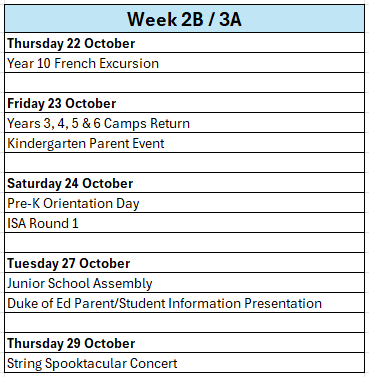
We warmly invite parents and carers to join us for our String Spooktacular.
This is a Halloween themed celebration of our curriculum and co-curricular string ensembles. Students in ‘Cello Ensemble, Chin Strings, Double Bass Ensemble, Sharp Strings, Viola Ensemble, Year 4 Accelerated Strings, Year 5/6 Strings will be performing.
Date: Thursday 29 October
Location: Hoskins Hall
Start time: 6pm
Prepare consistently. Retrieve frequently. Practise deliberately. Reflect regularly.
For our Year 12 students, their families, and their teachers, the HSC is a significant milestone after years of dedication, perseverance, and growth.
Across Australia and internationally, conversations continue about the future of senior secondary assessment. The growth of artificial intelligence is accelerating these discussions. In a world where AI can access information instantly, the enduring value of education lies in developing the uniquely human capabilities of critical thinking, discernment, communication, creativity, resilience, and ethical judgement. While opinions on the future of the HSC differ, there is broad agreement that students who successfully navigate their secondary education leave school with skills and dispositions that will serve them well in further study, the workplace, and society.
By the conclusion of Year 12, students have engaged in experiences that have strengthened a wide range of transferable skills, including:
Exercising critical thinking and discernment to analyse information and solve complex problems.
Developing the ability to plan, organise, and manage competing priorities effectively.
Demonstrating resilience and adaptability in response to challenge and uncertainty.
Becoming self-directed learners who can set goals, monitor progress, and reflect on their growth.
Communicating ideas effectively, ethically, and persuasively across a range of audiences and formats.
Collaborating productively with others and contributing to collective problem-solving and shared success.
Leveraging creativity, curiosity, and innovation to generate new ideas and approaches.
Strengthening the uniquely human capabilities of judgement, empathy, and leadership that remain essential in an AI-enabled world.
The HSC examination period certainly tests academic understanding, but it also reveals the persistence, determination, and adaptability students have developed throughout their schooling.
Following some of their examinations, students shared with me a range of reflections that captured both the challenges and rewards of the experience:
“Learning to control nerves and manage a basket of emotions is worth taking forward.”
“It was challenging but fair.”
“Some questions pushed me, but I was able to attempt everything.”
“I was nervous about finishing on time, but my preparation helped.”
“Looking back, I can really see how much my skills have improved since the Trial examinations.”
“The essay question wasn't my first choice, but I still wrote a lot.”
“All those practice papers were worth it.”
“My box breathing and calming routines really helped.”
“It was hard, very hard, but I am sure I am not the only one.”
These comments remind us that examinations are not simply about marks. They are opportunities for students to demonstrate persistence, adaptability, and the confidence that comes from sustained effort.
The foundational skills for success in Year 12 begin in Year 7. As all students in Years 7–10 will have examinations in Week 6 this term, the following guide may prove helpful in supporting their preparation.
Exam Roadmap (Years 7–10)
Step 1: Plan and Prioritise
Focus: Organisation and Self-Regulation
Audit each subject and identify knowledge gaps.
Create a balanced study timetable.
Set specific, achievable goals for each week.
Break large tasks into manageable chunks.
Study Skill: Plan with purpose rather than react under pressure.
Step 2: Retrieve and Review
Focus: Retrieval Practice
Use flashcards, quizzes, and self-testing.
Recall information from memory before checking notes.
Focus on key concepts and subject vocabulary.
Study Skill: Learning happens when we actively retrieve, not simply reread.
Step 3: Space and Strengthen
Focus: Spaced Practice
Revisit topics multiple times across the week.
Mix revision from different subjects.
Review previous learning before moving on.
Study Skill: Small, regular revision sessions are more powerful than cramming.
Step 4: Apply and Practise
Focus: Deliberate Practice
Complete examination-style questions.
Practise under timed conditions.
Seek feedback and refine responses.
Study Skill: Improvement comes from purposeful practice and feedback.
Step 5: Reflect and Refine
Focus: Metacognition
Identify what you know, what you don't know, and what needs more attention.
Analyse mistakes and misconceptions.
Adjust revision strategies where needed.
Study Skill: Great learners think about their thinking.
Step 6: Prepare and Perform
Focus: Readiness and Confidence
Complete a final retrieval cycle of key content.
Prioritise sleep, wellbeing, and healthy routines.
Organise equipment and examination logistics.
Trust your preparation and maintain perspective.
Study Skill: Confidence grows from consistent preparation.
Put simply:
Prepare consistently. Retrieve frequently. Practise deliberately. Reflect regularly.

On Monday, 26 October, our Year 12 cohort will participate in a two-hour workshop with
Matt Cogin, founder of Levelling Up, designed to build confidence, strengthen wellbeing
and encourage personal growth. Through storytelling, honest conversations and
practical strategies, students will explore how to navigate self-doubt, manage their
inner critic, embrace challenges as opportunities for growth and step outside their
comfort zones. The workshop will also encourage students to seek out mentors,
recognise opportunities and take greater ownership of the direction of their lives.
As the College’s incoming senior leaders for 2027, the session will provide Year 12
students with valuable opportunities to reflect on their personal values, develop their
leadership potential and consider the positive influence they can have on others. The
aim is to empower students to lead by example, support and inspire younger students,
and help establish a strong, positive and inclusive tone for the College community in
the year ahead.
Strings Spooktacular
We warmly invite parents and carers to join us for our String Spooktacular. This is a Halloween themed celebration of our curriculum and co-curricular string ensembles. Students in ‘Cello Ensemble, Chin Strings, Double Bass Ensemble, Sharp Strings, Viola Ensemble, Year 4 Accelerated Strings, Year 5/6 Strings will be performing.
Date: Thursday 29 October
Location: Hoskins Hall
Start time: 6pm

Important reminders for the Summer Sport season.
Congratulations to our Basketball teams on their efforts in Round 1 last Saturday. I particularly appreciated our students getting straight into their games following a busy week of OLE activities. Good luck to our Touch Football and Cricket teams commencing their competitions this Saturday.
A reminder that training for all teams has now begun.
Now that the work on Hoskins Hall is complete, bus pick up and drops off for Saturday Sport have now returned to the Senior School carpark.
Additional bus drop-off and pick-up points are available at Pheasant’s Nest and Mittagong only. Students requiring pick-up or drop-off at either location, or travelling privately to or from a fixture, must notify sport.admin@oxley.nsw.edu.au by Thursday.
Students must be collected by a parent or carer at these locations. If a student is to depart without a parent or carer present, written parental permission must be emailed to Sport Admin in advance.
Reminder: Saturday Sport Uniform Expectations
Students must wear only Oxley College PE or Sport uniform on Saturdays at all sporting fixtures; both home and away. This includes footwear. Non-Oxley items such as Crocs, UGG boots and slides are not permitted.
We are looking for experienced Touch Football referees to officiate our Saturday fixtures.
Paid opportunities are available.
Oxley College and Chevalier College have organised a Touch Football referee course on 27 October, hosted by Chevalier College. This will be run by NSW Touch Football. If you are interested in attending, please email sport.admin@oxley.nsw.edu.au for the registration link and further details.
Josh Hurkett
Head of Senior School Sport

Don't miss your chance to get the first tickets to secure the best seats to see Anh Do's smash-hit show The Happiest Refugee LIVE!!. In pre-sale now!
MITTAGONG RSL CLUB
TUESDAY, 2 MARCH 2027
To book follow this link: Anh Do Show - Mittagong RSL Club
Join us for our annual Birdy Breakfast to celebrate the Aussie Bird Count and discover the wonderful birdlife of the Wingecarribee region.Led by BirdLife Southern Highlands, small groups will explore Cecil Hoskins Nature Reserve, learning to identify and count local birds. Afterwards, enjoy a delicious breakfast and connect with fellow nature lovers.Whether you're an experienced birdwatcher or a novice, everyone is welcome! Details below.
Hear from NESA how you can celebrate World Teachers' Day
World Teachers’ Day will be celebrated in NSW on Friday 30 October 2026.
This year, we’re bringing back the NSW Teaching Gems Map so NSW schools and the broader community can celebrate our teachers.
We invite the community to pin a gem to the Teaching Gems Map, and recognise a teacher, past or present, who has made a difference to their lives and school community.
In 2025, we received over 18,500 heartwarming submissions showing how much our dedicated NSW teachers mean to their school communities.

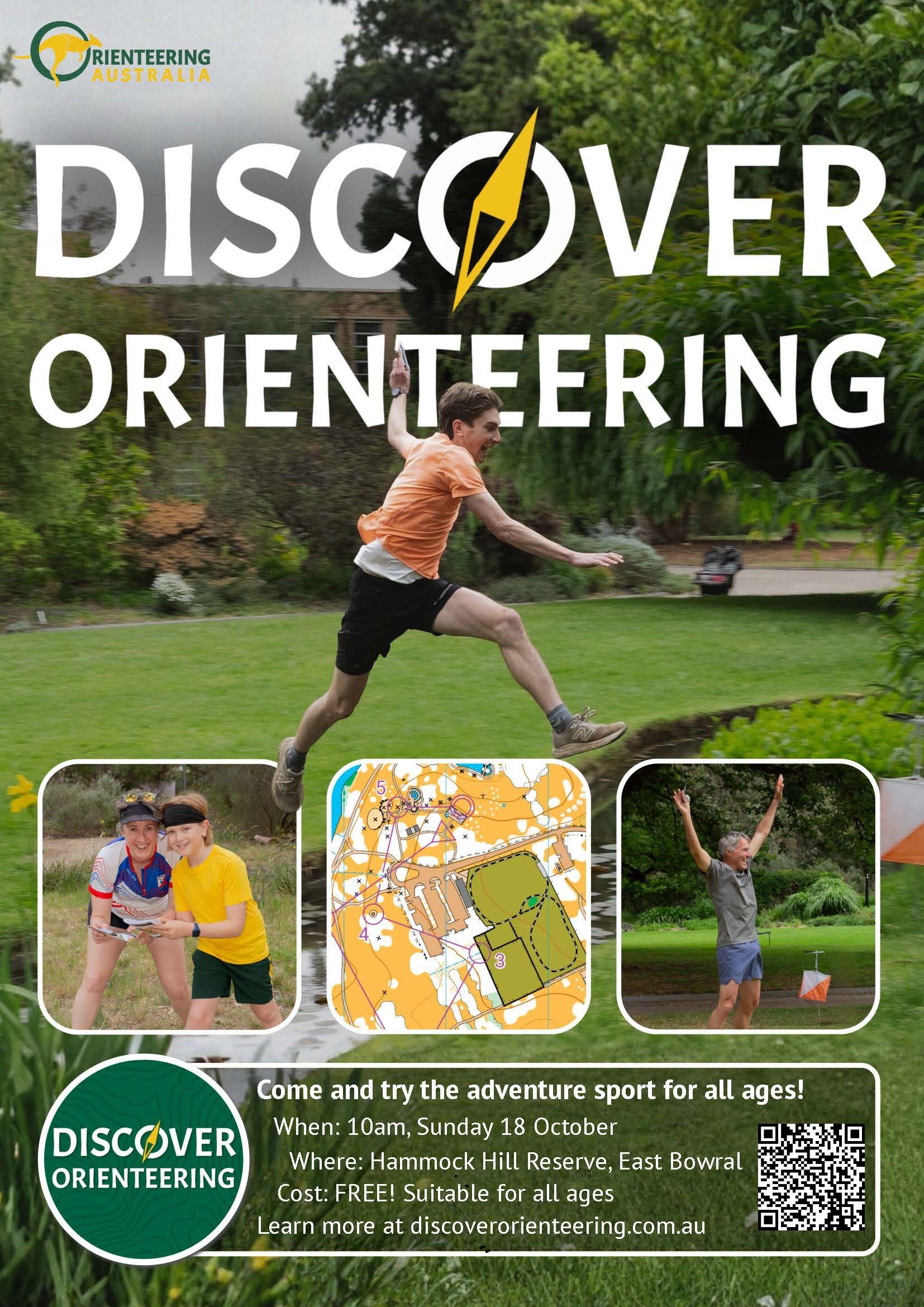
Discover Orienteering Bowral - Sunday 18th October
Come and try orienteering in a safe, welcoming environment—10am, Sunday October 18th, Hammock Hill Reserve. All ages welcome!

We’re excited to invite local families to the next Mittagong Junior Disco, a fun, safe and alcohol‑free event for children in the Southern Highlands!
Date: Saturday 29th August
Time: 4:00pm – 6:00pm
Venue: Mittagong RSL, Bessemer Street, Mittagong
Cost: $5 entry
Ages: 0–14 years
Tickets at the door.
Details to note:
CASH ONLY event
Alcohol‑free
Multiple gift vouchers will be drawn on the night
All funds raised go directly back to supporting children in the Southern Highlands community

Full of pirates, warriors and lost kids with a sprinkling of fairy dust and mischief, this is a fun and adventurous show with the storyline we all know and love. SHYAC have put our own magical spin on things, with a whimsical set and theme. There are fantastic musical numbers and a cast of talented Southern Highlands youth!

Type on the line above then press the Enter/Return key to submit a new search query